

1. 總覽
在本程式碼研究室中,您將執行 ADK 代理,使用兩種開放原始碼商務通訊協定,向多個電影院商家預訂電影票:
CineAgent 示範應用程式會連線至兩個具有不同功能的模擬電影院商家 (選位、特殊格式和付款方式),並從搜尋到付款,協調整個預訂流程。
課程內容
- 如何透過
/.well-known/ucp設定檔啟用 UCP 商家探索 - ADK 代理如何使用 UCP 搜尋目錄及建立結帳程序
- AP2 授權 (CartMandate、PaymentMandate) 如何確保交易安全
- 端對端 UCP 和 AP2 通訊協定如何確保代理式電子商務安全
軟硬體需求
- 已啟用計費功能的 Google Cloud 雲端專案
- 網路瀏覽器,例如 Chrome
- Python 3.11 以上版本
本程式碼研究室適合對 Python 和 Google Cloud 有基本認識的中階開發人員。完成本程式碼研究室大約需要 15 分鐘。
本程式碼研究室建立的資源費用應低於 $5 美元。
2. 瞭解 UCP 和 AP2 通訊協定
在深入瞭解如何建構代理程式前,我們先來瞭解這兩個通訊協定,這兩個通訊協定可確保代理式商務安全無虞。
通用商務通訊協定 (UCP)
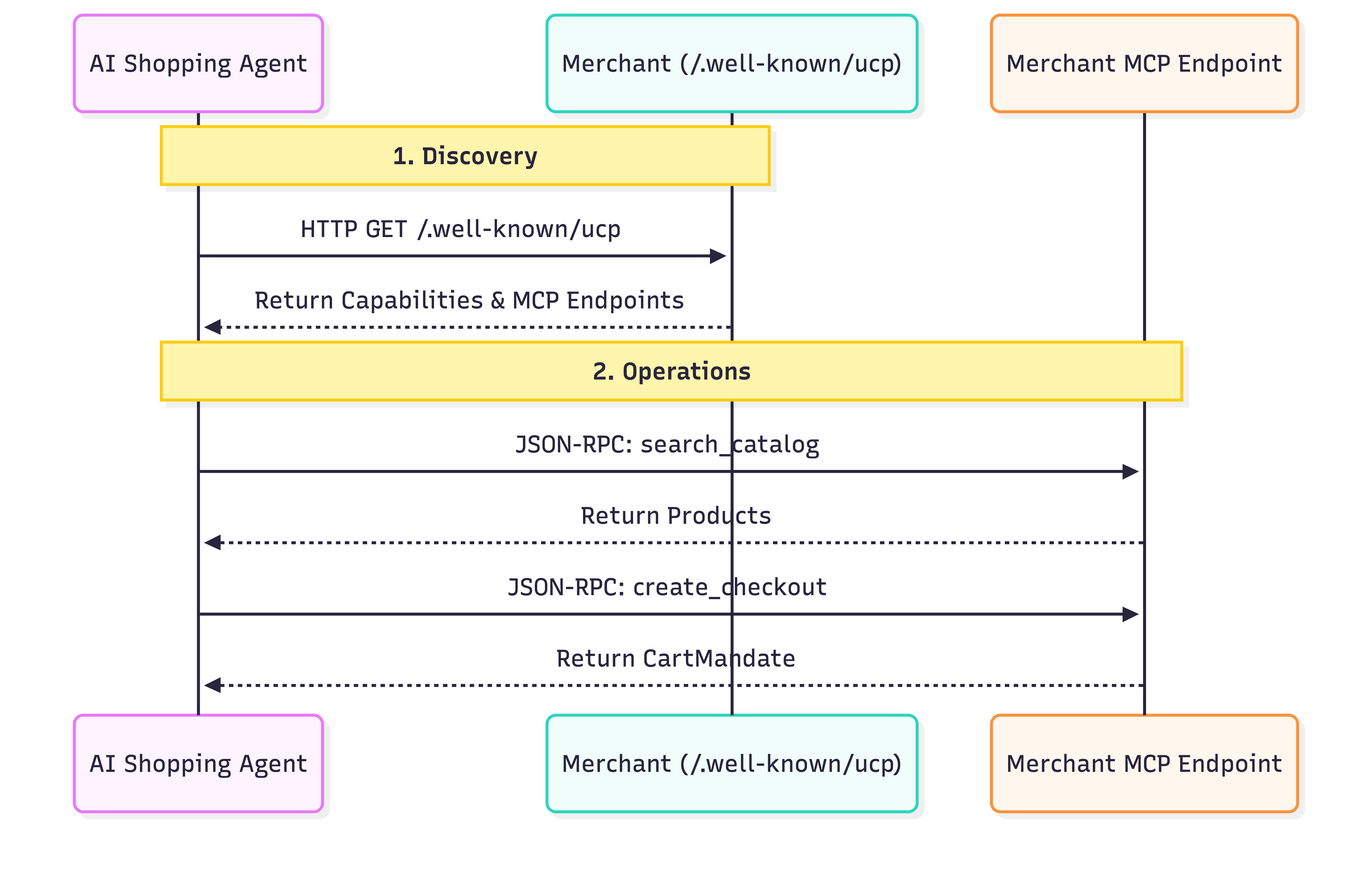
UCP 規範 AI 代理與商家互動的方式,這項功能引進標準化資源模型,解決代理商必須為每間商店學習自訂 API 的問題。
運作方式:
- 探索:每個符合 UCP 規範的商家都會在標準位置 (
/.well-known/ucp) 公開設定檔。範例:Everlane 的 UCP 端點。當服務專員讀取這個設定檔時,會尋找:- 功能:商家支援的獨立核心功能,例如目錄搜尋或結帳。
- 服務:用於交換資料的低階通訊層。例如:REST API、MCP (Model Context Protocol)、A2A (Agent2Agent Protocol)。
- 擴充功能:如果商家需要特殊行為,可以在這個設定檔中定義自訂擴充功能。
- 作業:探索完成後,代理程式會使用提供的服務端點執行作業。在本程式碼實驗室中,我們使用 Model Context Protocol (MCP) 做為服務傳輸方式。代理程式會對這個端點發出 JSON-RPC 2.0 呼叫,以叫用探索到的功能:搜尋產品、建立結帳程序及完成購買。
Agent Payments Protocol (AP2)
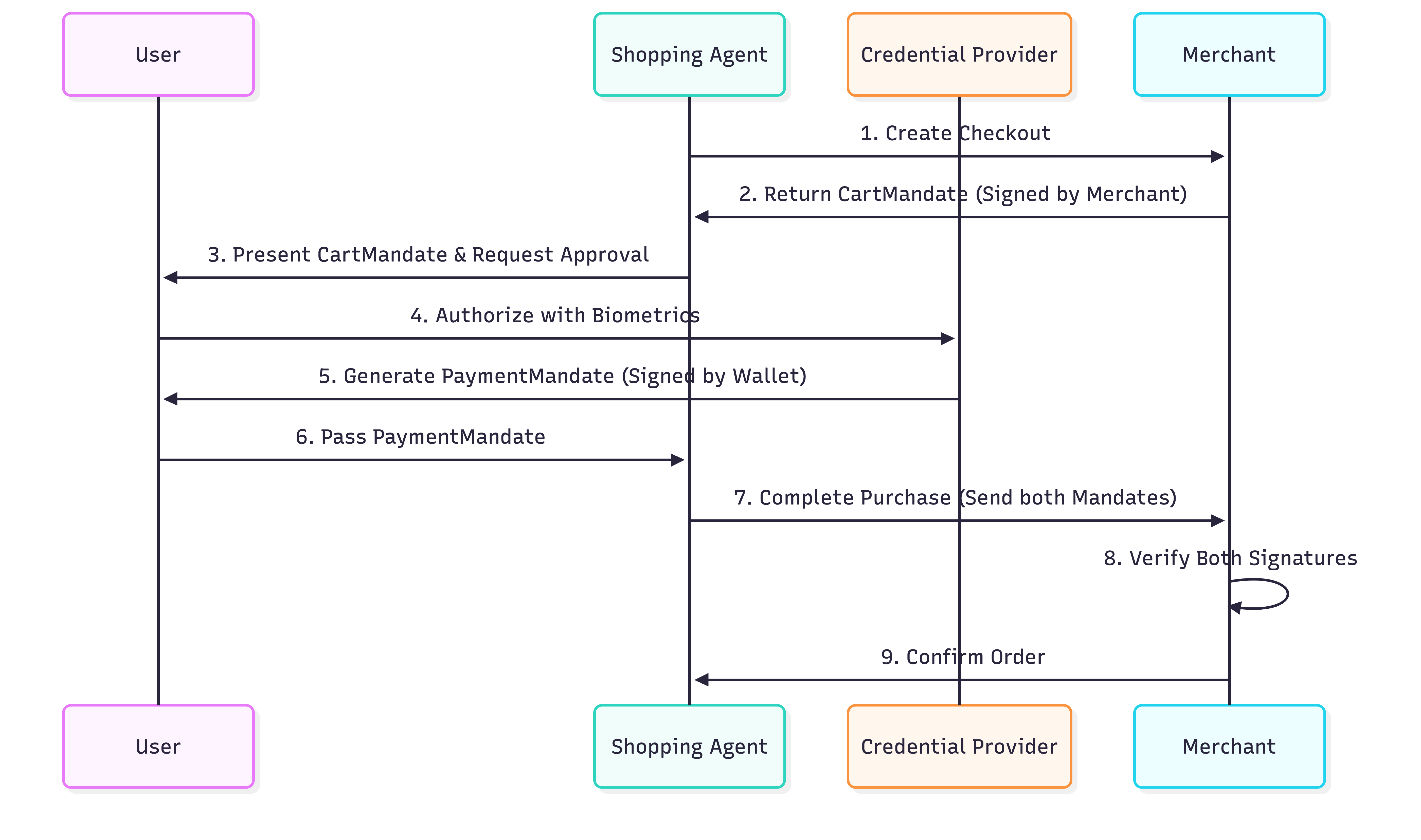
AP2 標準可讓代理人代表使用者授權付款。解決客服人員處理敏感付款憑證時的安全問題。
運作方式:
- 購物車授權:當代理程式使用 UCP 通訊協定建立結帳程序時,商家會傳回
CartMandate。這是包含購物車詳細資料和商家加密簽章的 JSON 物件。這項服務可確保價格不會變動。發出授權後,商家就無法變更價格。 - 付款委託書:驗證購物車內容後,使用者 (或代表使用者的代理程式) 會建立
PaymentMandate來授權付款。這個PaymentMandate會參照CartMandate,並包含使用者的加密簽章 (或授權權杖)。 - 雙重簽名驗證:商家會收到兩份授權書。他們會驗證
CartMandate上的簽名,以及PaymentMandate上的使用者簽名。如果兩者都有效,交易就會繼續進行。
這套「雙重鎖定」系統可確保商家不會超額收費,代理商也不會在未經授權的情況下支出費用。在正式版中,這些授權會使用 SD-JWT (選擇性揭露 JWT) 來保護使用者隱私。
3. 設定環境
設定 Google Cloud 專案
建立 Google Cloud 專案
- 在 Google Cloud 控制台的專案選取器頁面中,選取或建立 Google Cloud 專案。
- 確認 Cloud 專案已啟用計費功能。瞭解如何檢查專案是否已啟用計費功能。
啟動 Cloud Shell
Cloud Shell 是在 Google Cloud 中運作的指令列環境,已預先載入必要工具。
- 按一下 Google Cloud 控制台頂端的「啟用 Cloud Shell」。
- 連至 Cloud Shell 後,請驗證您的驗證:
gcloud auth list - 確認專案已設定完成:
gcloud config get project - 如果專案未如預期設定,請設定專案:
export PROJECT_ID=<YOUR_PROJECT_ID>
gcloud config set project $PROJECT_ID
存取 Gemini 模型
在 Cloud Shell 殼層環境中,複製並貼上下列指令。這樣一來,Cine Agent 就能使用 Gemini 模型。
export GOOGLE_CLOUD_PROJECT=$PROJECT_ID
export GOOGLE_CLOUD_LOCATION=global
export GOOGLE_GENAI_USE_VERTEXAI=True
設定目錄結構
複製並貼上下列指令,為代理程式建立新目錄:
mkdir -p agent_payments
cd agent_payments
安裝依附元件
Google Cloud Shell 已預先安裝 uv,可管理環境和依附元件。
- 在
agent_payments資料夾的根目錄建立pyproject.toml檔案,並加入以下內容。這個檔案定義了專案中繼資料和依附元件。
[project]
name = "agent-payments-demo"
version = "0.1.0"
description = "CineAgent booking agent using UCP and AP2"
requires-python = ">=3.11"
dependencies = [
    "google-adk>=1.29.0",
    "google-genai>=1.27.0",
    "fastapi>=0.115.0",
    "uvicorn>=0.34.0",
    "httpx>=0.28.0",
    "ap2 @ git+https://github.com/google-agentic-commerce/AP2.git@main",
    "ucp-sdk @ git+https://github.com/Universal-Commerce-Protocol/python-sdk.git@main",
]
- 執行下列指令,建立虛擬環境並安裝所有依附元件:
uv sync
- 啟動
uv建立的虛擬環境:
source .venv/bin/activate
4. 定義代理程式
撰寫任何工具邏輯之前,請先在名為 agent.py 的檔案中定義代理程式本身。這個代理程式會做為電影訂票流程的自動化調度管理工具。
建立 agent.py:
"""CineAgent — movie ticket booking agent using UCP and AP2."""

from google.adk.agents import Agent
from google.adk.tools import FunctionTool
from agent_payments.tools import (
    discover_theaters,
    search_movies,
    get_movie_detail,
    create_checkout,
    complete_purchase,
)

root_agent = Agent(
    model="gemini-3.1-pro-preview",
    name="cineagent",
    description="Movie ticket booking agent using UCP and AP2.",
    instruction="""You are CineAgent, a movie ticket booking assistant.

You help users find and book movie tickets across multiple theaters
using UCP (Universal Commerce Protocol) and AP2 (Agent Payments).

**Your tools:**
- discover_theaters: Find theaters and what they support
- search_movies: Search movies across all theaters
- get_movie_detail: Get showtimes at a specific theater
- create_checkout: Start a checkout session
- complete_purchase: Finalize with AP2 mandate signing

**Rules:**
- Always call discover_theaters first if you haven't yet
- Keep responses concise — summarize and suggest next steps
- Prices from tools are in cents (1500 = $15.00)
- Never invent data — only state what tools return
""",
    tools=[
        discover_theaters,
        search_movies,
        get_movie_detail,
        create_checkout,
        FunctionTool(complete_purchase, require_confirmation=True),
    ],
)
解釋程式碼
讓我們來細分這個代理程式定義的內容:
model="gemini-3.1-pro-preview":我們使用最新的 Gemini Pro 預先發布模型,進行複雜的推論和工具使用。instruction:這是引導代理行為的提示。這項提示會明確告知代理程式使用 UCP 和 AP2、列出可用工具,並設定重要規則,例如「絕不編造資料」和「價格以美分為單位」。tools:這是 Python 函式清單 (我們會在下一個步驟中建構),代理可以根據使用者的要求選擇呼叫這些函式。require_confirmation:你可以使用FunctionTool(my_function,require_confirmation=True)包裝任何工具。觸發後,代理程式會暫停並等待簡單的「是」或「否」核准,然後再執行工具。在這裡,代理會在執行complete_purchase工具前暫停,等待人工確認。
工具清單
代理程式定義會宣告我們需要建構的內容。每項工具都會對應至 UCP 或 AP2 通訊協定中的特定作業:
工具 | 用途 | 通訊協定動作 |
| 尋找商家及其服務 | 查詢 |
| 搜尋不同商家的目錄 | 從 JSON-RPC 到 MCP 端點 |
| 取得特定商家的電影場次 | 從 JSON-RPC 到 MCP 端點 |
| 啟動結帳工作階段 | 從 JSON-RPC 到 MCP 端點 |
| 授權付款並完成訂單 | 簽署 AP2 授權書並傳送給 MCP |
Gemini 模型會根據對話內容,決定何時呼叫各項工具。接下來,我們的工作是在 tools.py 中實作各項工具的功能。
5. 建構代理工具:探索和瀏覽
現在來實作代理程式用來瀏覽及探索電影的工具。每個工具都會包裝 UCP 作業。
建立名為 tools.py 的新檔案,然後複製並貼上下列程式碼:
"""Agent tools — each one wraps a UCP or AP2 operation."""

import asyncio
import json

from .ucp import UCPClient
from .ap2 import AP2Handler

# Initialize clients directly
_merchant_urls = ["http://localhost:8081", "http://localhost:8082"]
_ucp = UCPClient()
_ap2 = AP2Handler()
瞭解設定
為讓本程式碼研究室專注於建構代理程式,我們將使用 UCPClient 和 AP2Handler 這兩個輔助類別,稍後會介紹這兩個類別。
- 簡介:這些是我們為本程式碼研究室建立的手寫輔助類別,用於模擬與模擬商家互動。由於官方 UCP 和 AP2 SDK 尚未推出,我們使用這些輔助程式來彌補缺口。在正式環境中,您可以使用正式版 SDK。
- 目前請將這些物件視為輔助物件:
_ucp.discover(url):擷取商家的設定檔。_ucp.mcp_call(url, method, params):將 JSON-RPC 2.0 要求傳送至商家 MCP 端點。
探索劇院
這項工具是 UCP 流程的第一步。並找出現有的商家及其支援的項目。
新增至「tools.py」:
async def discover_theaters() -> str:
    """Discover available theater merchants and their capabilities via UCP."""
    theaters = []
    for url in _merchant_urls:
        info = await _ucp.discover(url)
        theaters.append(
            {
                "url": url,
                "name": info["name"],
                "capabilities": info["capabilities"],
                "payment_handlers": info["payment_handlers"],
            }
        )
    return json.dumps(theaters, indent=2)
這項設定的作用:
- 這項函式會疊代伺服器提供的商家網址清單。在本程式碼研究室的後續章節中,我們會設定兩個模擬商家。
- 針對每個網址,系統會呼叫
_ucp.discover(url),這會觸及/.well-known/ucp端點。 - 並將名稱、功能和付款處理常式收集到摘要清單中。
- 並以 JSON 字串形式傳回清單,供代理程式讀取。
搜尋電影
這項工具會搜尋所有已發現的商家,並合併搜尋結果。這點非常重要,因為同一部電影可能會在多個戲院以不同格式 (IMAX、Dolby) 播放,價格也會有所不同。
新增至「tools.py」:
async def search_movies(query: str = "") -> str:
    """Search for movies across all theaters. Use '' to browse all."""
    all_movies = {}
    for url, merchant in _ucp.merchants.items():
        result = await _ucp.mcp_call(url, "search_catalog", {"query": query})
        for product in result.get("products", []):
            mid = product["id"]
            if mid not in all_movies:
                all_movies[mid] = {
                    "id": mid,
                    "title": product["title"],
                    "categories": product.get("categories", []),
                    "theaters": {},
                }
            showtimes = []
            for v in product.get("variants", []):
                opts = {
                    o["name"]: o["value"]
                    for o in v.get("selected_options", [])
                }
                showtimes.append(
                    {
                        "id": v["id"],
                        "format": opts.get("format", "Standard"),
                        "time": opts.get("time", ""),
                        "price": v.get("price", {}),
                        "seats": v.get("availability", {}).get(
                            "seats_available", 0
                        ),
                    }
                )
            all_movies[mid]["theaters"][url] = {
                "name": merchant["name"],
                "showtimes": showtimes,
            }
    return json.dumps(list(all_movies.values()), indent=2)
這項設定的作用:
- 這個函式會逐一檢查所有找到的劇院。
- 將搜尋目錄 JSON-RPC 要求 (
_ucp.mcp_call(url, "search_catalog", {"query": query})) 傳送至商家 MCP 端點。 - 接著,系統會進行一些清理作業,剖析結果以找出電影及其「變體」(代表特定放映時間和格式)。依 ID 將電影分組,避免使用者看到重複的電影項目。
取得電影詳細資料
這項工具會取得特定電影在特定戲院的完整目錄詳細資料。
新增至「tools.py」:
async def get_movie_detail(movie_id: str, merchant_url: str) -> str:
    """Get detailed showtimes for a movie at a specific theater."""
    result = await _ucp.mcp_call(
        merchant_url, "lookup_catalog", {"product_id": movie_id}
    )
    return json.dumps(result, indent=2)
這項設定的作用:
- 這會呼叫商家 MCP 端點的
lookup_catalog方法,並傳遞特定movie_id。這會傳回詳細資訊,例如特定戲院的放映時間和座位供應情形。
6. 建構代理工具:結帳和付款
這些工具會處理結帳和購買流程。此時 AP2 通訊協定就能派上用場,確保交易安全。
建立結帳頁面
這項工具會在特定劇院的特定放映時間啟動結帳工作階段。
新增至「tools.py」:
async def create_checkout(
    merchant_url: str, showtime_id: str, quantity: int = 1
) -> str:
    """Create a checkout session for tickets at a theater."""
    result = await _ucp.mcp_call(merchant_url, "create_checkout", {
        "checkout": {
            "line_items": [
                {"item": {"id": showtime_id}, "quantity": quantity}
            ],
            "context": {"country": "US", "currency": "USD"},
        }
    })
    return json.dumps(result, indent=2)
這項設定的作用:
- 並在商家的 MCP 端點上呼叫
create_checkout方法。 - 並傳遞使用者要求的
showtime_id和quantity。 - 商家會傳回包含 AP2 CartMandate 的 JSON 物件。
注意:如果您檢查回應資料,ap2.cart_mandate 會包含 merchant_authorization 欄位。這是商家鎖定報價的加密簽章。設定後即無法變更!
完成購買程序
這項工具會執行三項操作:
- 我們從結帳程序取得 CartMandate,並進行驗證(模擬)。
- 建立並簽署 PaymentMandate (模擬)。
- 將簽署的委託書傳送給商家,完成購買程序。
新增至「tools.py」:
async def complete_purchase(
    checkout_id: str, merchant_url: str, payment_method: str = "card"
) -> str:
    """Complete purchase with AP2 payment authorization."""
    # 1. Get the CartMandate from the checkout
    checkout = await _ucp.mcp_call(
        merchant_url, "get_checkout", {"checkout": {"id": checkout_id}}
    )
    cart_mandate = _ap2.process_cart_mandate(checkout)
    if not cart_mandate:
        return {"error": "No cart mandate — checkout may have expired"}

    # 2-3. Create and sign the PaymentMandate
    # In production, this call would trigger a user prompt (biometric or device auth)
    # via the AP2 Wallet SDK. In this demo, it just computes a mock SHA-256 hash.
    payment_mandate = _ap2.create_payment_mandate(cart_mandate, payment_method)

    # 4. Send both mandates to complete the purchase
    result = await _ucp.mcp_call(merchant_url, "complete_checkout", {
        "checkout": {
            "id": checkout_id,
            "payment": {
                "instruments": [{
                    "handler_id": f"card_{merchant_url.split(':')[-1]}",
                    "type": "card",
                }],
            },
            "ap2": {"payment_mandate": payment_mandate},
        }
    })
    return json.dumps(result, indent=2)
為什麼需要兩份授權書?CartMandate 可確保商家在報價後無法變更價格。PaymentMandate 可確保代理程式不會在未經同意的情況下向使用者收費。流程如下:
Merchant locks price -> User authorizes charge -> Merchant verifies both -> Order completes。
檢查點:完整 tools.py
完整的 tools.py 現在應有 5 個工具函式,以及 UCP 和 AP2 用戶端的模組層級初始化。確認是否像這樣:
"""Agent tools — each one wraps a UCP or AP2 operation."""

import asyncio
import json

from ucp import UCPClient
from ap2 import AP2Handler

# Initialize clients directly
_merchant_urls = ["http://localhost:8081", "http://localhost:8082"]
_ucp = UCPClient()
_ap2 = AP2Handler()


async def discover_theaters() -> str:
    """Discover available theater merchants and their capabilities via UCP."""
    theaters = []
    for url in _merchant_urls:
        info = await _ucp.discover(url)
        theaters.append(
            {
                "url": url,
                "name": info["name"],
                "capabilities": info["capabilities"],
                "payment_handlers": info["payment_handlers"],
            }
        )
    return json.dumps(theaters, indent=2)


async def search_movies(query: str = "") -> str:
    """Search for movies across all theaters. Use '' to browse all."""
    all_movies = {}
    for url, merchant in _ucp.merchants.items():
        result = await _ucp.mcp_call(url, "search_catalog", {"query": query})
        for product in result.get("products", []):
            mid = product["id"]
            if mid not in all_movies:
                all_movies[mid] = {
                    "id": mid,
                    "title": product["title"],
                    "categories": product.get("categories", []),
                    "theaters": {},
                }
            showtimes = []
            for v in product.get("variants", []):
                opts = {
                    o["name"]: o["value"]
                    for o in v.get("selected_options", [])
                }
                showtimes.append(
                    {
                        "id": v["id"],
                        "format": opts.get("format", "Standard"),
                        "time": opts.get("time", ""),
                        "price": v.get("price", {}),
                        "seats": v.get("availability", {}).get(
                            "seats_available", 0
                        ),
                    }
                )
            all_movies[mid]["theaters"][url] = {
                "name": merchant["name"],
                "showtimes": showtimes,
            }
    return json.dumps(list(all_movies.values()), indent=2)


async def get_movie_detail(movie_id: str, merchant_url: str) -> str:
    """Get detailed showtimes for a movie at a specific theater."""
    result = await _ucp.mcp_call(
        merchant_url, "lookup_catalog", {"product_id": movie_id}
    )
    return json.dumps(result, indent=2)


async def create_checkout(
    merchant_url: str, showtime_id: str, quantity: int = 1
) -> str:
    """Create a checkout session for tickets at a theater."""
    result = await _ucp.mcp_call(merchant_url, "create_checkout", {
        "checkout": {
            "line_items": [
                {"item": {"id": showtime_id}, "quantity": quantity}
            ],
            "context": {"country": "US", "currency": "USD"},
        }
    })
    return json.dumps(result, indent=2)


async def complete_purchase(
    checkout_id: str, merchant_url: str, payment_method: str = "card"
) -> str:
    """Complete purchase with AP2 payment authorization."""
    # 1. Get the CartMandate from the checkout
    checkout = await _ucp.mcp_call(
        merchant_url, "get_checkout", {"checkout": {"id": checkout_id}}
    )
    cart_mandate = _ap2.process_cart_mandate(checkout)
    if not cart_mandate:
        return {"error": "No cart mandate — checkout may have expired"}

    # 2-3. Create and sign the PaymentMandate
    # In production, this call would trigger a user prompt (biometric or device auth)
    # via the AP2 Wallet SDK. In this demo, it just computes a mock SHA-256 hash.
    payment_mandate = _ap2.create_payment_mandate(cart_mandate, payment_method)

    # 4. Send both mandates to complete the purchase
    result = await _ucp.mcp_call(merchant_url, "complete_checkout", {
        "checkout": {
            "id": checkout_id,
            "payment": {
                "instruments": [{
                    "handler_id": f"card_{merchant_url.split(':')[-1]}",
                    "type": "card",
                }],
            },
            "ap2": {"payment_mandate": payment_mandate},
        }
    })
    return json.dumps(result, indent=2)
7. 讓程式碼可執行
如果是實際的 UCP 商家,您只要將網址提供給服務專員即可。在本程式碼研究室中,我們需要兩項項目才能在本機進行測試:
- 模擬商家:模擬 UCP 端點的本機伺服器,方便您進行測試
- 通訊協定輔助程式 - UCP 和 AP2 的精簡 HTTP 包裝函式 (在正式版中,官方 SDK 會取代這些函式)
注意:您不需要仔細閱讀這段程式碼。這些檔案會模擬實際基礎架構和 SDK 提供的內容。直接複製。
通訊協定輔助程式
UCP 和 AP2 目前沒有用戶端 SDK,這兩個檔案會處理 HTTP 管道。
建立 ucp.py:
"""UCP client — discovers merchants and calls their MCP tools."""

import uuid
import httpx


class UCPClient:
    def __init__(self):
        self.client = httpx.AsyncClient(timeout=30)
        self.merchants = {}  # url -> merchant info dict

    async def discover(self, merchant_url: str) -> dict:
        """Fetch a merchant's UCP profile from /.well-known/ucp."""
        resp = await self.client.get(f"{merchant_url}/.well-known/ucp")
        resp.raise_for_status()
        profile = resp.json()
        ucp = profile["ucp"]
        info = {
            "name": merchant_url.split("//")[-1],
            "mcp_endpoint": ucp["services"]["dev.ucp.shopping"][0]["endpoint"],
            "capabilities": list(ucp.get("capabilities", {}).keys()),
            "payment_handlers": list(ucp.get("payment_handlers", {}).keys()),
        }
        self.merchants[merchant_url] = info
        return info

    async def mcp_call(
        self, merchant_url: str, tool_name: str, arguments: dict
    ) -> dict:
        """Call a merchant's MCP tool via JSON-RPC 2.0."""
        merchant = self.merchants[merchant_url]
        resp = await self.client.post(
            merchant["mcp_endpoint"],
            json={
                "jsonrpc": "2.0",
                "id": uuid.uuid4().hex,
                "method": "tools/call",
                "params": {"name": tool_name, "arguments": arguments},
            },
        )
        resp.raise_for_status()
        data = resp.json()
        if "error" in data:
            raise Exception(f"MCP error: {data['error']}")
        return data.get("result", {})

    async def close(self):
        await self.client.aclose()
建立 ap2.py:
"""AP2 mandate handler — creates and signs payment mandates."""

import uuid
import hashlib


class AP2Handler:
    def process_cart_mandate(self, checkout_response: dict) -> dict | None:
        """Extract the merchant-signed CartMandate from a checkout response.

        The CartMandate is the merchant's cryptographic price guarantee —
        it locks the total so it can't change between checkout and payment.
        """
        return checkout_response.get("ap2", {}).get("cart_mandate")

    def create_payment_mandate(
        self, cart_mandate: dict, payment_method: str = "card"
    ) -> dict:
        """Create and sign a PaymentMandate authorizing payment.

        References the merchant's CartMandate and adds user authorization.
        Together they form a two-party agreement: merchant guarantees price,
        user authorizes charge.
        """
        contents = cart_mandate["contents"]
        mandate_id = uuid.uuid4().hex

        return {
            "mandate_id": mandate_id,
            "cart_reference": contents["id"],
            "merchant": contents["merchant_name"],
            "total": contents["total"],
            "payment_method": payment_method,
            "user_authorization": self._sign(mandate_id, contents["id"]),
        }

    def _sign(self, mandate_id: str, checkout_id: str) -> str:
        """Sign the mandate. Production uses real crypto (sd-jwt-vc)."""
        payload = f"{mandate_id}:{checkout_id}"
        return hashlib.sha256(payload.encode()).hexdigest()
模擬商家
建立 merchants.py:
"""Mock UCP merchant servers — two theaters with different capabilities."""

import uuid
import time
import multiprocessing
from datetime import datetime, timezone, timedelta

import uvicorn
from fastapi import FastAPI

# ── Theater data ────────────────────────────────────────────

THEATERS = {
    8081: {
        "name": "Meridian Cinemas",
        "movies": [
            {
                "id": "opp",
                "title": "Oppenheimer",
                "categories": ["Drama", "History"],
                "showtimes": [
                    {"id": "st_opp_7pm_imax", "format": "IMAX", "time": "7:00 PM", "price": 2200, "seats": 45},
                    {"id": "st_opp_930pm", "format": "Standard", "time": "9:30 PM", "price": 1500, "seats": 80},
                ],
            },
            {
                "id": "dune3",
                "title": "Dune: Part Three",
                "categories": ["Sci-Fi", "Action"],
                "showtimes": [
                    {"id": "st_dune_8pm_imax", "format": "IMAX", "time": "8:00 PM", "price": 2200, "seats": 30},
                ],
            },
        ],
        "discounts": {},
    },
    8082: {
        "name": "StarLight Theaters",
        "movies": [
            {
                "id": "opp",
                "title": "Oppenheimer",
                "categories": ["Drama", "History"],
                "showtimes": [
                    {"id": "st_opp_6pm_atmos", "format": "Dolby Atmos", "time": "6:00 PM", "price": 1800, "seats": 60},
                ],
            },
            {
                "id": "spider",
                "title": "Spider-Verse",
                "categories": ["Animation", "Action"],
                "showtimes": [
                    {"id": "st_spider_4pm", "format": "Standard", "time": "4:00 PM", "price": 1200, "seats": 100},
                ],
            },
        ],
        "discounts": {},
    },
}


def create_app(port):
    theater = THEATERS[port]
    app = FastAPI()
    sessions = {}

    # ── UCP Discovery endpoint ──────────────────────────────
    @app.get("/.well-known/ucp")
    def discovery():
        caps = {
            "dev.ucp.shopping.catalog.search": [{"version": "2026-01-15"}],
            "dev.ucp.shopping.catalog.lookup": [{"version": "2026-01-15"}],
            "dev.ucp.shopping.checkout": [{"version": "2026-01-15"}],
            "dev.ucp.shopping.ap2_mandate": [{"version": "2026-01-15"}],
        }

        return {
            "ucp": {
                "version": "2026-01-15",
                "services": {
                    "dev.ucp.shopping": [
                        {"version": "2026-01-15", "transport": "mcp",
                         "endpoint": f"http://localhost:{port}/mcp"}
                    ]
                },
                "capabilities": caps,
                "payment_handlers": {
                    "com.example.card": [
                        {"id": f"card_{port}", "version": "2026-01-15",
                         "available_instruments": [{"type": "card"}], "config": {}}
                    ]
                },
            }
        }

    # ── MCP JSON-RPC endpoint ───────────────────────────────
    @app.post("/mcp")
    def mcp(body: dict):
        tool = body["params"]["name"]
        args = body["params"].get("arguments", {})
        rid = body.get("id", "1")

        if tool == "search_catalog":
            q = args.get("query", "").lower()
            hits = [m for m in theater["movies"]
                    if not q or q in m["title"].lower()
                    or any(q in c.lower() for c in m["categories"])]
            return _ok(rid, {"products": [_product(m) for m in hits]})

        if tool == "lookup_catalog":
            mid = args.get("product_id") or (args.get("ids", [None])[0])
            movie = next((m for m in theater["movies"] if m["id"] == mid), None)
            if not movie:
                return _err(rid, "Not found")
            return _ok(rid, {"products": [_product(movie)]})

        if tool == "create_checkout":
            co = args.get("checkout", {})
            sid = f"chk_{uuid.uuid4().hex[:12]}"
            items, subtotal = [], 0
            for li in co.get("line_items", []):
                st = _find_showtime(li["item"]["id"])
                if not st:
                    continue
                mv = _find_movie(li["item"]["id"])
                qty = li.get("quantity", 1)
                amt = st["price"] * qty
                subtotal += amt
                items.append({
                    "id": f"li_{uuid.uuid4().hex[:8]}",
                    "item": {
                        "id": st["id"],
                        "title": f"{mv['title']} — {st['format']} {st['time']}",
                        "price": st["price"],
                    },
                    "quantity": qty,
                    "totals": [{"type": "subtotal", "amount": amt}],
                })
            tax = int(subtotal * 0.08)
            total = subtotal + tax
            session = {
                "id": sid,
                "status": "ready_for_complete",
                "currency": "USD",
                "line_items": items,
                "totals": [
                    {"type": "subtotal", "display_text": "Subtotal", "amount": subtotal},
                    {"type": "tax", "display_text": "Tax", "amount": tax},
                    {"type": "total", "display_text": "Total", "amount": total},
                ],
                "metadata": {"theater_name": theater["name"]},
                "ap2": {
                    "cart_mandate": {
                        "contents": {
                            "id": sid,
                            "merchant_name": theater["name"],
                            "total": {
                                "label": "Total",
                                "amount": {"currency": "USD", "value": total / 100},
                            },
                            "cart_expiry": (
                                datetime.now(timezone.utc) + timedelta(minutes=10)
                            ).isoformat(),
                        },
                        "merchant_authorization": f"mock_merchant_sig_{sid}",
                    }
                },
            }
            sessions[sid] = session
            return _ok(rid, session)

        if tool == "get_checkout":
            sid = args.get("checkout", {}).get("id") or args.get("id")
            return _ok(rid, sessions.get(sid, {"error": "not_found"}))


        if tool == "complete_checkout":
            co = args.get("checkout", {})
            sid = co.get("id")
            session = sessions.get(sid)
            if not session:
                return _err(rid, "Not found")
            session["status"] = "completed"
            session["order"] = {
                "id": f"ord_{uuid.uuid4().hex[:8]}",
                "created_at": datetime.now(timezone.utc).isoformat(),
                "tickets": [
                    {
                        "movie": li["item"]["title"],
                        "quantity": li["quantity"],
                        "ticket_code": uuid.uuid4().hex[:8].upper(),
                    }
                    for li in session["line_items"]
                ],
            }
            session["ap2"]["payment_mandate_verified"] = True
            return _ok(rid, session)

        return _err(rid, f"Unknown tool: {tool}")

    def _ok(rid, result):
        return {"jsonrpc": "2.0", "id": rid, "result": result}

    def _err(rid, msg):
        return {"jsonrpc": "2.0", "id": rid, "error": {"code": -32000, "message": msg}}

    def _product(movie):
        return {
            "id": movie["id"],
            "title": movie["title"],
            "categories": movie["categories"],
            "variants": [
                {
                    "id": st["id"],
                    "selected_options": [
                        {"name": "format", "value": st["format"]},
                        {"name": "time", "value": st["time"]},
                    ],
                    "price": {"amount": st["price"], "currency": "USD"},
                    "availability": {"available": True, "seats_available": st["seats"]},
                }
                for st in movie["showtimes"]
            ],
        }

    def _find_showtime(sid):
        return next(
            (st for m in theater["movies"] for st in m["showtimes"] if st["id"] == sid),
            None,
        )

    def _find_movie(sid):
        return next(
            (m for m in theater["movies"] for st in m["showtimes"] if st["id"] == sid),
            None,
        )

    return app


def _run(port):
    uvicorn.run(create_app(port), host="0.0.0.0", port=port, log_level="warning")


if __name__ == "__main__":
    for port in THEATERS:
        multiprocessing.Process(target=_run, args=(port,), daemon=True).start()
    print("Merchants running: Meridian (:8081), StarLight (:8082)")
    print("Press Ctrl+C to stop")
    try:
        while True:
            time.sleep(1)
    except KeyboardInterrupt:
        pass
這會建立兩個 FastAPI 伺服器,每個伺服器都有兩個端點:
GET /.well-known/ucp- UCP 探索。傳回商家的功能、MCP 端點網址和接受的付款方式。POST /mcp:MCP (Model Context Protocol) 作業。處理目錄搜尋、結帳、折扣和付款的 JSON-RPC 2.0 呼叫。
在新的終端機中啟動商家,商家必須保持運作:
cd agent_payments
source .venv/bin/activate
python merchants.py
如下所示:
Merchants running: Meridian (:8081), StarLight (:8082)
返回第一個終端機,驗證 UCP 探索:
curl -s http://localhost:8081/.well-known/ucp | python -m json.tool
您應該會看到商家的功能、MCP 端點網址和付款處理常式。
8. 使用 ADK Web 執行代理
我們來使用 ADK CLI 內建的網頁式 UI!這會在瀏覽器中提供即時通訊介面,並自動處理工具確認提示。
您的專案現在應如下所示:
agent_payments/
├── merchants.py      # Mock UCP merchants
├── ucp.py            # UCP client helper
├── ap2.py            # AP2 mandate handler
├── tools.py          # Agent tools
├── agent.py          # Agent definition
└── pyproject.toml
立即體驗
在目前的終端機中,前往上層目錄 (agent_payments 上方的一個資料夾),然後啟動 ADK 網頁版 UI:
cd ../
adk web --allow_origins '*'
畫面會顯示伺服器正在執行的輸出內容,並提供網址 (通常是 http://localhost:8000 或類似網址)。
與服務專員聯絡
- 在瀏覽器中開啟
adk web提供的網址。 - 畫面上會顯示對話介面。
- 試著詢問:「目前上映中的電影?」
- 代理商會找出電影院並在幕後搜尋目錄,然後透過 UCP 彙整兩家商家的結果。
- 要求訂票:「訂購 2 張《奧本海默》晚上 7 點的電影票」。
- 當代理嘗試呼叫
complete_purchase時,請注意 ADK 網頁 UI 會彈出確認對話方塊或資訊卡! - 如要授權交易,請在即時通訊中回覆這個確切的 JSON 字串:
{"confirmed": true}。 - 代理人會完成購買程序,並將訂單確認資訊連同票券代碼傳送給您!
幕後到底發生了什麼事?
create_checkout→ 商家傳回 AP2 CartMandate (已簽署的價格鎖定)complete_purchase→ 建立 PaymentMandate、簽署 (模擬 SHA-256),並將兩個授權書傳送給商家- 商家驗證兩項簽章 → 核發票券 (模擬)
9. 清理
為避免本機伺服器持續運作,請清理資源:
- 在執行
adk web的終端機中,按下 Ctrl+C 鍵停止代理程式伺服器。 - 在執行
python merchants.py的終端機中,按下 Ctrl+C 鍵停止模擬商家。 - 在兩個終端機中執行下列指令,停用虛擬環境:
deactivate
- (選用) 如果您為這個程式碼研究室建立了新的 Google Cloud 雲端專案,並想刪除該專案,請執行下列指令:
gcloud projects delete $GOOGLE_CLOUD_PROJECT
10. 恭喜!🎉
您已建構 ADK 代理,可使用 UCP 和 AP2 探索商家、瀏覽目錄及完成購買。
您學到的內容
在本程式碼研究室中,您建構了可處理安全商務流程的 ADK 代理。以下摘要說明您建構的內容,以及套用的重要概念:
建構內容:
- 5 個代理工具,可包裝 UCP 和 AP2 作業,包括探索、目錄搜尋、結帳和付款。
- AP2 委託書簽署 - CartMandate (商家價格鎖定) + PaymentMandate (使用者授權)。
- 多商家搜尋:一個代理程式查詢多個劇院,並合併結果。
重要概念:
通訊協定 | 用途 | 運作方式 |
UCP 探索 | 代理程式會尋找商家及其服務 |
|
UCP MCP | 代理程式瀏覽目錄、建立結帳程序 | 對商家 MCP 端點的 JSON-RPC 2.0 呼叫 |
AP2 CartMandate | 商家鎖定報價 | 商家簽署,包含總金額 + 有效期限 |
AP2 PaymentMandate | 使用者授權扣款 | 使用者簽署,參照 CartMandate |
正式版有何不同?
本程式碼研究室會使用模擬。實際運作中:
- UCP 探索會根據登錄檔解析,而不是硬式編碼的本機主機網址
- MCP 端點由實際商家代管,採用相同的 JSON-RPC 2.0 通訊協定,提供真實的商品目錄
- AP2 授權使用 sd-jwt-vc 簽署,而非 SHA-256 雜湊
- 付款授權:使用 AP2 Wallet SDK,並顯示使用者同意提示
- 前端會將工具結果顯示為豐富的使用者介面 (產品格線、結帳摘要、確認資訊卡)
後續步驟
- 探索 AP2 通訊協定規格,並建構自己的付款功能代理
- 為商家導入 UCP,啟用代理式商務
- 將 AP2 與 A2A 連結,建立多代理商務工作流程
- 瞭解加密貨幣付款的 AP2 x402 擴充功能